
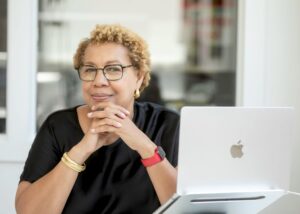
By Joan Jenkinson, Co-Founder & CEO, Black Screen Office
When CBC announced on May 8, 2026, that it’s increasing its investment in documentaries by $7 million and launching a new FAST channel this fall, my first instinct was to pause and appreciate the significance of the moment, not just for the documentary community broadly, but specifically for the Black creators and storytellers we work with every day at the Black Screen Office.
Documentary film has always been one of the most powerful vehicles for Black voices. It’s the format that bears witness, that tells truth, that says we were here and this is what happened. When a major public broadcaster like CBC commits meaningful new dollars to the genre, with an explicit focus on feature-length work, diverse storytellers, and pathways for emerging talent, that’s a signal we shouldn’t take lightly.
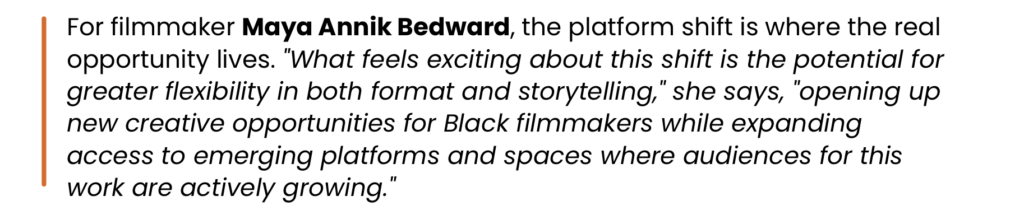
The $7 million investment and CBC’s stated commitment to “create more opportunities for a diverse range of storytellers at all levels” open a door. It opens a door for Black documentary filmmakers who have long had stories to tell but too few places willing to fund and platform them. It opens a door for regional voices that rarely reach national audiences. And it opens a door for the next generation of Black talent who deserve to see themselves not just on screen, but behind the camera and in the edit suite.
The transition away from the linear documentary Channel toward a FAST channel is a practical reflection of where audiences are going. We can’t be precious about delivery mechanisms when the goal is reach and discoverability. What matters is that the investment follows the audience, and that Black storytellers are part of every conversation about what gets made and what gets seen.
That said, I want to be thoughtful here. Announcements are the beginning, not the end. At the BSO, we know that commitments to diversity must be backed up by transparent processes, equitable access to funding, and real accountability. We’ll be watching and engaging as CBC fleshes out the details of these new pathways and initiatives. We’ll be asking questions about who is being reached by these “dedicated pathways,” and whether Black filmmakers at all career stages — not just those who have already broken through — are genuinely included.
The Documentary Organization of Canada has called this “an important investment in documentary storytelling in Canada,” and I agree. But important investments become transformative only when implemented with intention.
For now, I’m encouraged. The documentary form is alive and well in Canada — just look at the packed houses at Hot Docs last week. Black audiences want to see their stories told. Black filmmakers are ready to tell them. And with the right support from CBC, this could be a genuine turning point.
We look forward to the conversation.