Future Proof: Led by Black Creators. Made for the Industry
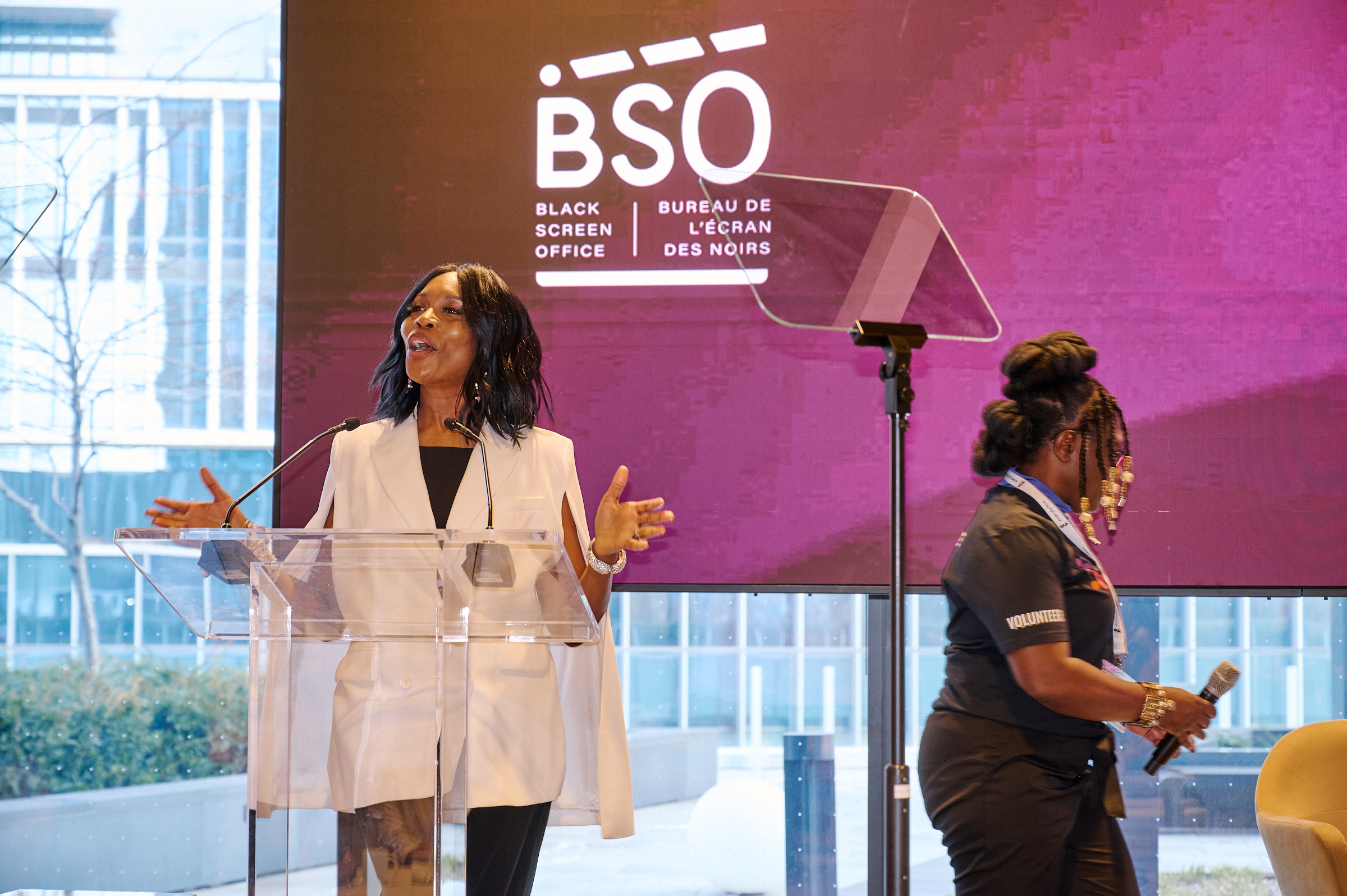
The 2026 Black Screen Office Symposium brought together creatives, producers, executives, and industry leaders for a full day of conversation, connection, and reflection on the future of the screen industry.
Set against the theme Future Proof: Led by Black Creators. Made for the Industry, the Symposium created a space that balanced honesty with possibility. Across panels, keynotes, and interactive sessions, one message remained consistent. The industry is changing, and Black creatives are actively shaping what comes next.
From the opening moments to the final panel, the day moved between storytelling and strategy, grounding big ideas in lived experience.
Setting the Tone: An Industry in Transition
The day began with opening remarks that framed the current moment with clarity.
The pathways into the industry are evolving, but so are the challenges. While new opportunities are emerging, particularly for Black creatives, the landscape is also becoming more competitive and complex.
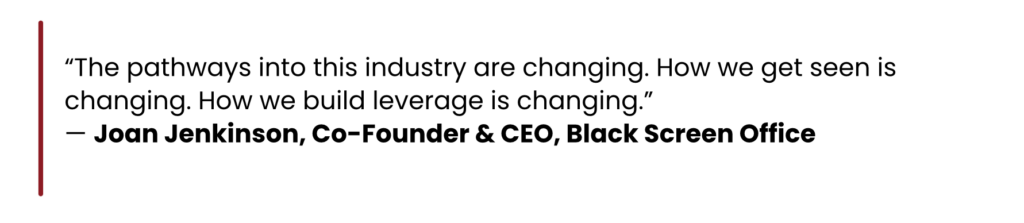
“The pathways into this industry are changing. How we get seen is changing. How we build leverage is changing.”
At the same time, access alone is no longer the goal.
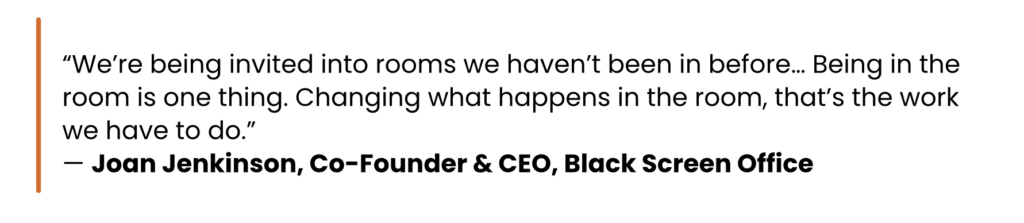
This dual reality, progress alongside ongoing barriers, shaped the conversations that followed.
Opening with Culture: Fefe Dobson
Before the discussions began, Fefe Dobson opened the day with an acoustic performance that grounded the Symposium in creativity.
The performance created a shared moment for attendees, setting a tone that felt both intentional and energizing.
As one attendee reflected, it brought “the exact right tone in energy and content to start the day.”
It was a reminder that at the center of the industry is the work itself, and the artists who bring it to life.
Centring the Storytellers
Throughout the day, the voices of filmmakers remained central.
The Filmmaker’s Perspective panel, featuring Hubert Davis (Director/Founder, Folktale Films) and Alison Duke (Director, Writer, Producer), moderated by Magalie Boutin (Director of Communications, Public Affairs and Partnerships, NFB), highlighted the importance of Black storytelling as essential to the industry, not only as representation but as a driver of cultural and creative growth.
Filmmakers spoke openly about their journeys, navigating funding systems, accessing opportunities, and building sustainable careers over time.
For many attendees, hearing these perspectives was both validating and instructive.
“It’s so important to learn from others and hear about their career paths,” one participant shared, reflecting on the impact of these conversations.
A Defining Moment: Adjoa Andoh’s Keynote
One of the most powerful moments of the Symposium came from the keynote address by Adjoa Andoh (Actor, Writer, Director — Lady Danbury in Bridgerton).
Her reflection on storytelling moved beyond industry insights, focusing instead on memory, legacy, and the urgency of capturing stories before they are lost.
Her words reframed storytelling as something deeply human, an act of preservation as much as creation.
Attendees described her as “brilliant, witty, insightful and completely steeped in our culture,” highlighting the emotional impact of her presence.
Adapting to Change: Innovation and AI
As the industry evolves, so too must the tools and approaches used to create within it.
Sessions such as Producing Smarter: AI Tools, led by Owais Lightwala (Assistant Professor, The Creative School, TMU), explored how new technologies and formats are reshaping the creative landscape.
From AI-driven workflows to digital-first storytelling, the conversations emphasized the importance of adapting while maintaining creative integrity.
Attendees highlighted these discussions as some of the most relevant of the day, particularly in understanding how to navigate an increasingly complex and fast-moving environment.
Access in Action: Global Commissioners and the Business Exchange
The Symposium also created space for direct engagement with the industry.
The Global Commissioners Super Session, moderated by Jordan Pinto (North American Editor, C21 Media Ltd.), offered rare insight into how projects are evaluated and commissioned on an international scale, bringing together decision-makers including Kai Bowe (OWN), Kaio Grizzelle (Channel 4), Nataly Kudiabor (UFA Fiction / Fremantle), Nikki Love (ALLBLK & WEtv), Cédric-Pierre Louis (Thema TV / Canal+), and Nicole T. Roberts (Hoorae Film & TV).
Participants noted how valuable it was to learn what commissioners across different regions are looking for, from budgets to co-production opportunities.
This focus on access continued through the BSO Business Exchange and Masterclasses, where attendees could connect directly with executives, share their ideas, and gain practical insights into the industry.
For many, this was a highlight of the day.
“The Business Exchange was my favourite part… a great opportunity to hear directly from industry executives,” one attendee shared.
These sessions moved beyond discussion and into action, creating real opportunities for connection and growth.
Closing with Impact: Hate the Player
The day concluded with From Track to Screen: Inside Hate the Player, bringing together the cast and creators behind one of the most anticipated Canadian series of the year.
The panel, moderated by Sasha Leigh Henry (Director & Showrunner), featured Shamier Anderson, Karen Robinson, Ben Johnson, Anthony Q. Farrell, and Mark Montefiore, offering a behind-the-scenes look at how the project came to life, exploring themes of identity, ambition, and lived experience while highlighting the collaboration and innovation required to produce work at this scale.
For attendees, it served as a powerful example of what is possible when storytelling, strategy, and perspective come together.
A Space for Community and Connection
Beyond the sessions themselves, one of the most consistent themes in attendee feedback was the importance of community.
Many described the experience of being in a room filled with Black creatives and professionals as both inspiring and empowering.
“Being in this room was so empowering… to see so many Black people who are passionate, successful, and confident.”
Others emphasized the value of connection, describing the Symposium as a space to learn, network, and build relationships that extend beyond the event.
“I made a lot of incredible connections and got a lot of valuable information for my projects.”
Looking Ahead
The 2026 BSO Symposium was not just a reflection on the current state of the industry. It was a forward-looking conversation about what comes next.
Across every session, the focus remained on building something sustainable.
Careers that last.
Stories that resonate.
And an industry that reflects the voices shaping it.
The future of the screen industry is already being defined, not only by the projects being created, but by the people in the room.
And at the BSO Symposium, that future was fully in motion.
Photo Credit: Henji Milius, iOptixStudio Inc., 2026