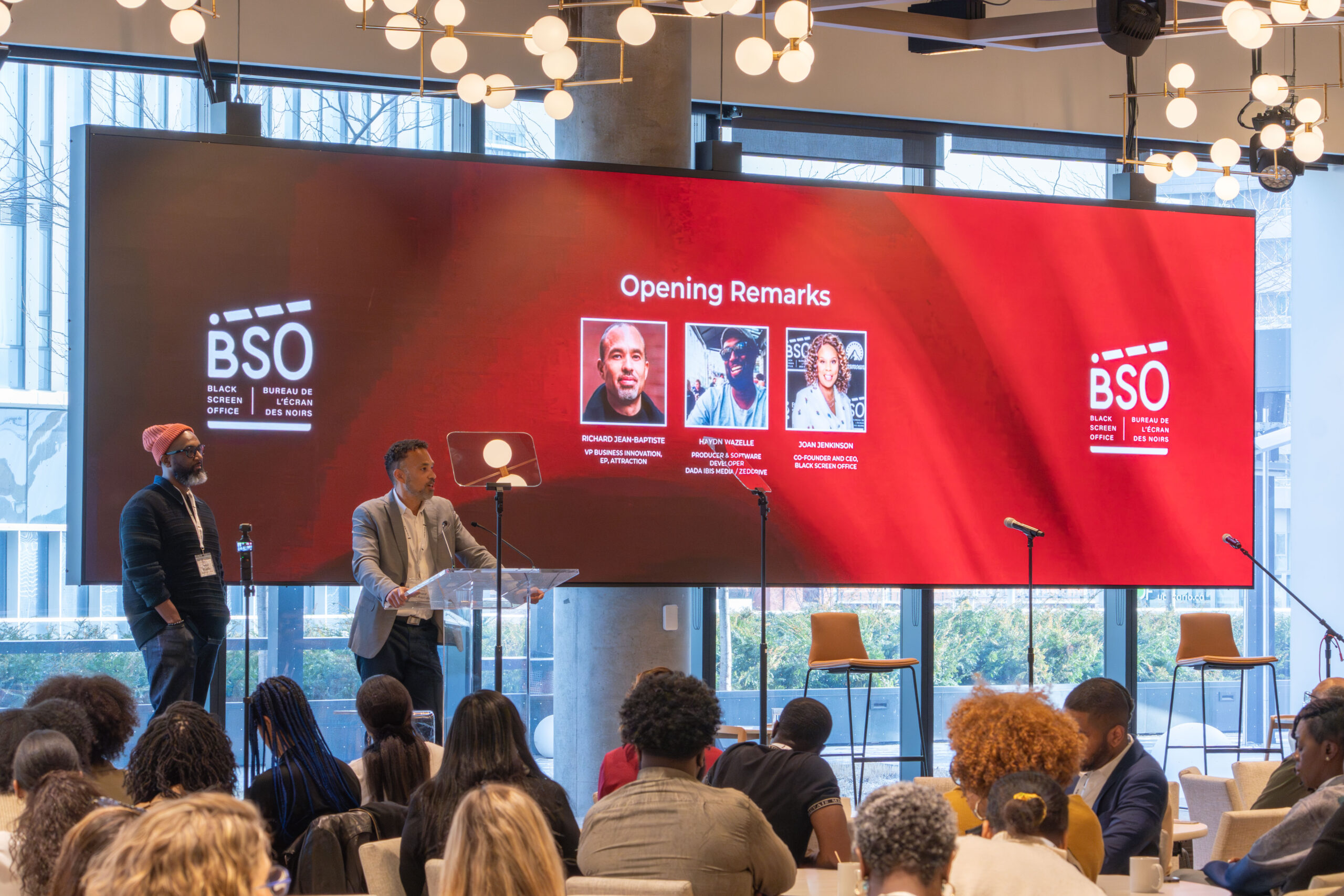
Speakers: Joan Jenkinson (Co-Founder & CEO, Black Screen Office), Richard Jean-Baptiste (BSO Board Co-Chair, Montréal), and Haydn Wazelle (BSO Board Co-Chair, Vancouver). Hosted by Lanette Ware-Bushfield (Producer, Actress, CEO).
The 2026 BSO Symposium opened with a clear and intentional message, one that grounded the entire day in both reality and possibility.
Delivered by BSO leadership, the opening remarks were not simply a welcome. They served as a reflection on the current state of the screen industry, and a call to action for the creatives, producers, and decision-makers gathered in the room.
From the outset, the tone was honest. The industry is shifting, and not always in ways that make it easier to build a career. While new opportunities are emerging, particularly for Black creatives, there is also a tightening of resources, increasing competition, and a growing need to be strategic about how to move forward.
Joan Jenkinson, Co-Founder and CEO of the Black Screen Office, opened by grounding the moment in real examples. She spoke about watching TikTok creator Tope Babalola build a following on his own terms and then walk into a packed TIFF Lightbox premiere.
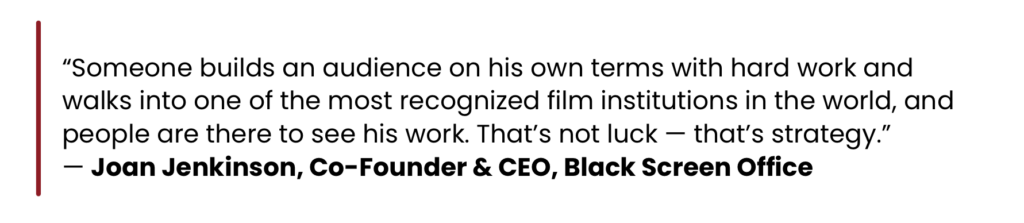
From there, she named the dual reality shaping the industry today.
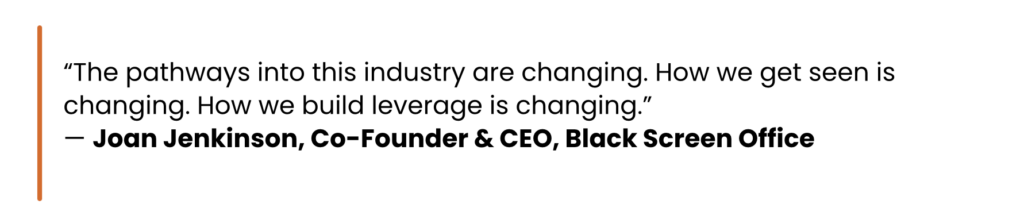
This dual reality formed the core of the conversation. Progress is happening, but it is not linear. For every new opportunity, there are still structural challenges that must be acknowledged and addressed.
The remarks also spoke directly to the experience of Black creatives within this moment. Over the past few years, increased attention has led to more opportunities for entry. However, as the industry contracts, there is a risk that those gains could be reversed.
“Black people who got a shot over the last three or four years… are being told quietly, and sometimes not so quietly, to get back in line,” Jenkinson shared.
By naming this reality, the opening remarks set a tone of transparency that carried throughout the Symposium. Rather than presenting an overly optimistic narrative, the conversation acknowledged both the progress that has been made and the work that remains.
At the same time, there was a strong emphasis on agency.
The Black Screen Office has increasingly been invited into spaces where key industry decisions are being discussed. This shift represents more than visibility. It signals a growing ability to influence how policies are shaped, how funding is distributed, and how opportunities are created.
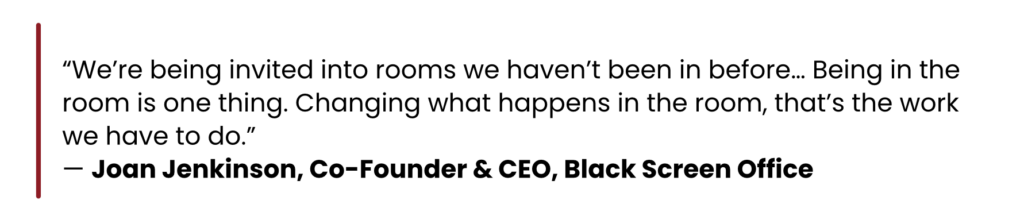
This distinction was critical. Access alone is not the goal. The focus is on impact, on ensuring that being present in these spaces leads to meaningful change for Black creatives across the industry.
The remarks also reinforced the importance of sustainability. Building a career in film and television is not just about getting a project made. It is about creating long-term opportunities, stable companies, and lives where creative work is not secondary, but central.
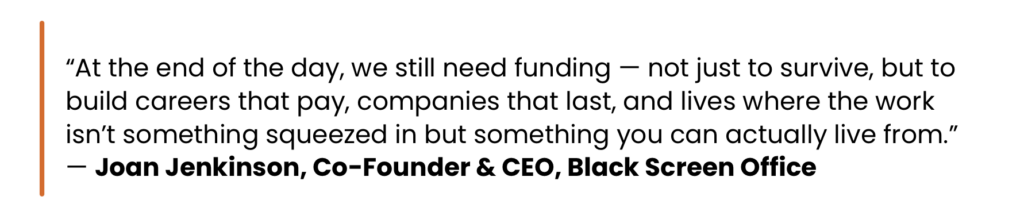
This framing shifted the conversation from short-term wins to long-term vision. It encouraged attendees to think beyond immediate opportunities and consider how to build something enduring within an evolving industry.
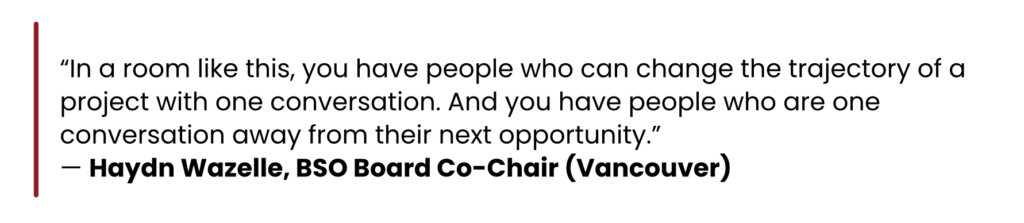
BSO Board Co-Chairs Richard Jean-Baptiste and Haydn Wazelle then reinforced the weight of the moment. Jean-Baptiste spoke to the privilege of being in the room, urging attendees to treat the day as a bridge between those who want to tell stories and those who can bring them to life. Wazelle grounded that message in scale.
For those in the room, the opening remarks did more than introduce the day. They created a shared understanding of where the industry stands and where it needs to go.
They also set a tone that many attendees carried with them throughout the Symposium. As reflected in feedback, being in a space filled with Black creatives, professionals, and decision-makers was both powerful and necessary. It reinforced the importance of community, especially in an industry where access and opportunity can often feel limited.
In many ways, the opening remarks did exactly what they were meant to do. They grounded the day in reality, while still pointing toward possibility.
They made it clear that the future of the industry will not simply happen. It will be shaped by the people in the room, through intention, collaboration, and a commitment to building something that lasts.
Photo Credit: Henji Milius, iOptixStudio Inc., 2026